Emergency Dentist in Manvel, TX | Same-Day Dental Care
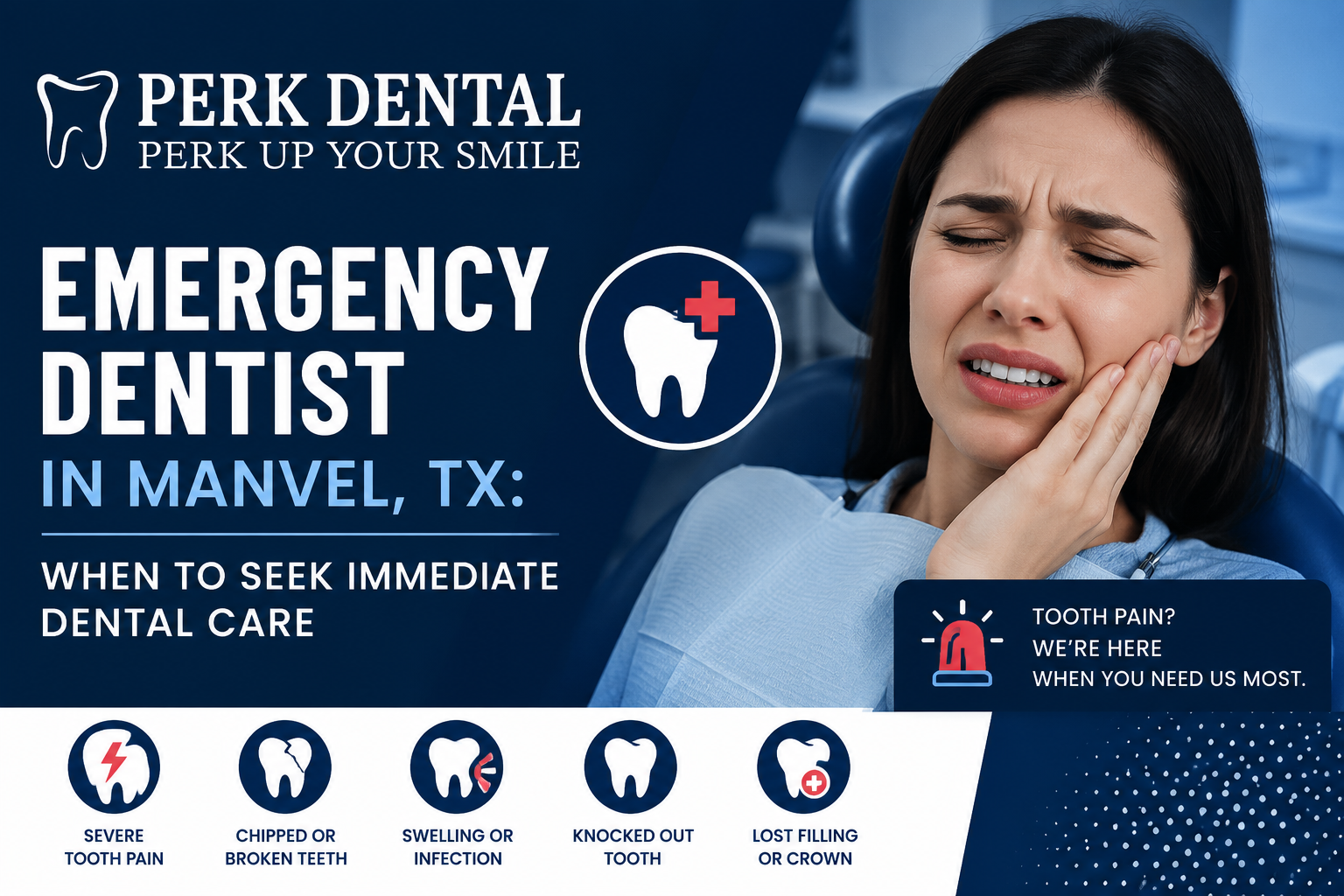
Emergency Dentist in Manvel, TX: When to Seek Immediate Dental Care
Dental emergencies can happen when you least expect them. Whether it's a sudden toothache, a broken tooth, or an injury during sports, getting prompt treatment can make the difference between saving and losing a tooth.
At Perk Dental in Manvel, TX, we understand that dental emergencies are stressful. Our team provides timely, compassionate care to relieve pain, protect your oral health, and restore your smile as quickly as possible.
This guide explains what qualifies as a dental emergency, what you should do before your appointment, and how emergency dental care can help prevent more serious complications.
What Is a Dental Emergency?
A dental emergency is any oral health problem that requires prompt treatment to stop pain, control bleeding, prevent infection, or save a tooth.
Some issues can safely wait a day or two, while others need immediate attention.
Common dental emergencies include:
- Severe or persistent toothaches
- Broken or chipped teeth
- Knocked-out teeth
- Loose permanent teeth
- Lost crowns or fillings causing significant discomfort
- Dental abscesses
- Swelling of the gums or face
- Uncontrolled bleeding after dental trauma
- Jaw injuries
If you're unsure whether your situation is an emergency, it's always better to contact your dentist for guidance.
Signs You Should See an Emergency Dentist Immediately
You shouldn't ignore symptoms such as:
Severe Tooth Pain
Persistent pain may indicate:
- Deep tooth decay
- An infected tooth
- An exposed nerve
- A cracked tooth
- An abscess
Pain is your body's way of signaling that something needs attention.
Facial Swelling
Swelling around the gums, cheeks, or jaw may be a sign of infection.
If swelling is accompanied by:
- Fever
- Difficulty swallowing
- Trouble breathing
Seek emergency medical attention immediately, as serious dental infections can spread.
Knocked-Out Tooth
A knocked-out permanent tooth is one of the few true dental emergencies where every minute matters.
Seeing a dentist within 30–60 minutes offers the best chance of saving the tooth.
Broken or Cracked Tooth
Even if the tooth doesn't hurt immediately, cracks can expose the inner layers of the tooth, allowing bacteria to enter and increasing the risk of infection.
Dental Abscess
An abscess is a pocket of infection that can cause:
- Severe pain
- Swelling
- Bad taste in the mouth
- Fever
- Swollen lymph nodes
Without treatment, the infection may spread to other parts of the body.
What to Do Before You Reach the Dentist
If You Have a Toothache
- Rinse your mouth with warm water.
- Gently floss around the affected tooth.
- Avoid placing aspirin directly on the gums.
- Use a cold compress on the outside of your face if swelling is present.
If You Break a Tooth
- Save any broken pieces.
- Rinse your mouth with warm water.
- Apply gentle pressure if there's bleeding.
- Use a cold compress to reduce swelling.
If a Tooth Gets Knocked Out
Hold the tooth by the crown, not the root.
If possible:
- Gently rinse it with water.
- Try placing it back into the socket.
- If that isn't possible, keep it in milk or a tooth preservation solution.
- Contact your dentist immediately.
If You Lose a Crown or Filling
While waiting for your appointment:
- Keep the area clean.
- Avoid chewing on that side.
- Save the crown if possible.
What Treatments Can an Emergency Dentist Provide?
Emergency dental treatment depends on the cause of the problem.
Common treatments include:
- Tooth-colored fillings
- Dental crowns
- Root canal therapy
- Tooth extractions
- Treatment for dental infections
- Repair of chipped or broken teeth
- Temporary restorations
- Pain management
The goal is to relieve discomfort while preserving as much natural tooth structure as possible.
Can You Wait Until Tomorrow?
Some dental problems can wait for a scheduled appointment, including:
- Small chips without pain
- Minor sensitivity
- Lost fillings without discomfort
However, you should not delay care if you experience:
- Severe pain
- Swelling
- Fever
- Bleeding that won't stop
- Trauma to permanent teeth
- Signs of infection
When in doubt, call your dentist.
How to Prevent Dental Emergencies
While not every emergency can be prevented, these habits can lower your risk:
- Brush twice daily with fluoride toothpaste.
- Floss every day.
- Wear a mouthguard during sports.
- Avoid chewing ice or hard candies.
- Never use your teeth as tools.
- Visit your dentist regularly for exams and cleanings.
Routine dental visits often identify problems before they become emergencies.
Why Choose Perk Dental in Manvel, TX?
At Perk Dental, we know that dental emergencies require prompt attention and compassionate care.
Our team is committed to:
- Same-day emergency appointments whenever possible
- Comprehensive evaluations
- Advanced diagnostic technology
- Personalized treatment plans
- Comfortable, patient-focused care
Whether you're dealing with sudden pain or a dental injury, we're here to help restore your oral health.
Frequently Asked Questions
How do I know if my toothache is an emergency?
If the pain is severe, persistent, accompanied by swelling, fever, or difficulty eating, you should contact a dentist as soon as possible.
Can a knocked-out tooth be saved?
Yes. The sooner you receive treatment—ideally within 30 to 60 minutes—the better the chance of saving the tooth.
Should I go to the emergency room for a dental emergency?
Hospital emergency rooms can help with severe infections, facial trauma, or uncontrolled bleeding. For most dental emergencies, seeing a dentist is the best option because they can provide definitive treatment.
How quickly should I treat a broken tooth?
Even if it isn't painful, a broken tooth should be evaluated promptly to prevent further damage or infection.
Can I wait if my dental crown falls off?
If you're not experiencing pain, it may not be an immediate emergency, but you should schedule an appointment as soon as possible to protect the tooth.
Final Thoughts
Dental emergencies can be frightening, but acting quickly can protect your oral health and prevent more extensive treatment later.
If you're experiencing severe tooth pain, a broken tooth, swelling, or another urgent dental problem, seeking prompt care is the best way to restore your smile and relieve discomfort. Early treatment often leads to better outcomes and can help preserve your natural teeth.
A chipped or broken tooth can worsen without treatment. Learn the immediate steps to protect your tooth before seeing your dentist.
Not every dental problem is an emergency. Learn the symptoms that require immediate dental care and when to contact an emergency dentist in Manvel.
Need an emergency dentist in Manvel, TX? Learn which dental problems require urgent treatment and how Perk Dental provides fast, compassionate emergency dental care.
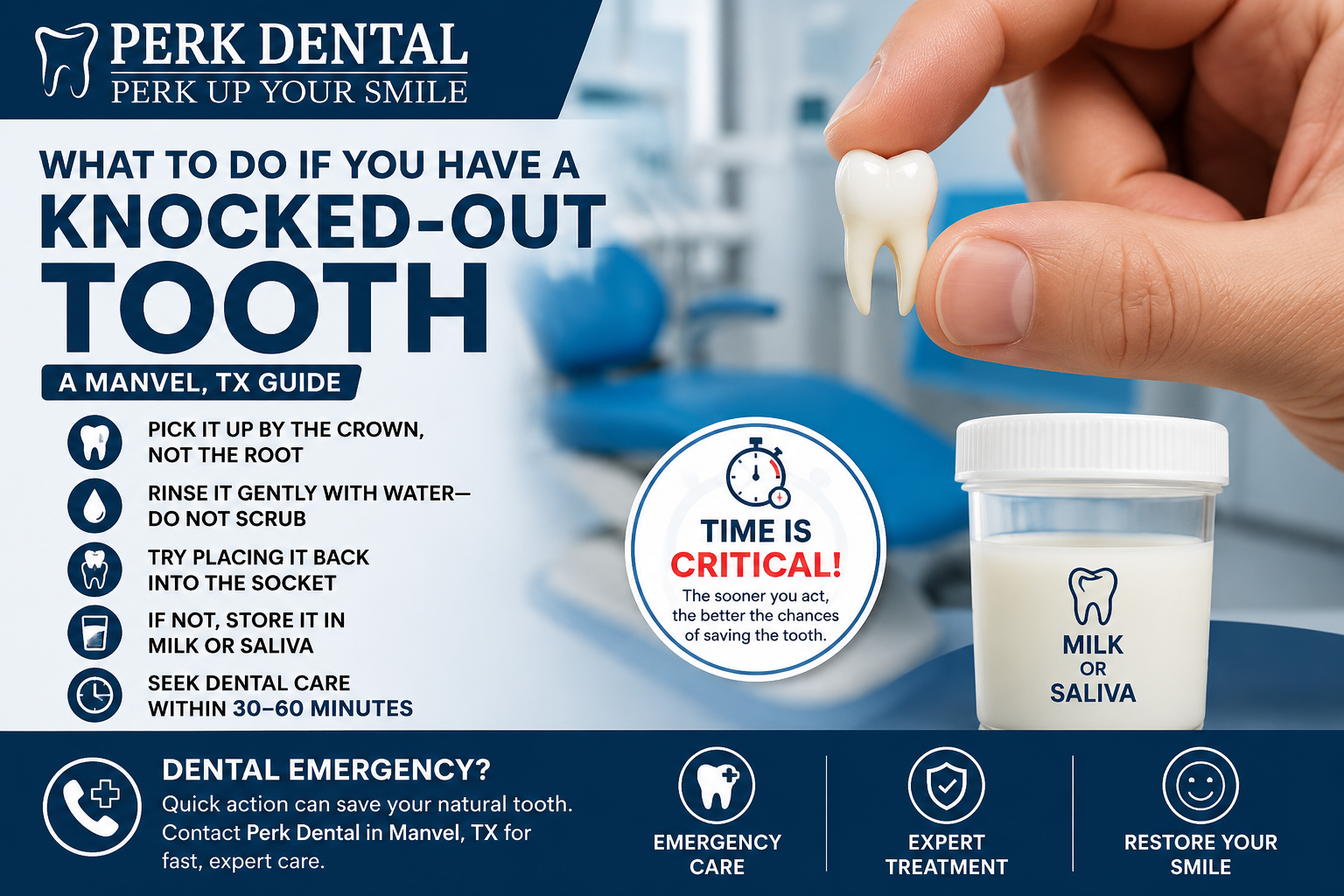
Need an emergency dentist in Manvel, TX? Learn the essential steps to take after a knocked-out tooth and why immediate treatment at Perk Dental is crucial.
Need fast relief from tooth pain or a dental emergency? Perk Dental offers same-day emergency dental care in Manvel, TX for toothaches, broken teeth, infections & more.
Learn the common signs you may need a root canal treatment in Manvel, TX. Discover symptoms, causes, and when to visit a dentist for treatment.

Learn about the most common dental problems treated by dentists in Manvel, TX, including cavities, gum disease, and wisdom tooth issues.
Discover the top benefits of choosing a family dentist in Manvel, TX. Learn how Perk Dental provides convenient and comprehensive dental care for the entire family.

Are molars and wisdom teeth the same? Learn the difference, sizes, eruption age, and when removal is needed. Expert dentist in Manvel TX at Perk Dental.

When it comes to restoring a damaged tooth, patients often wonder whether a dental crown or a filling is the better option. Choosing the right treatment depends on the extent of the damage, the tooth’s location, and long-term oral health considerations. At Perk Dental in Manvel, TX, we guide you through these choices, ensuring that your smile remains healthy, functional, and beautiful. Understanding Dental Fillings Dental fillings are among the most common treatments for minor to moderate tooth decay or damage. A filling involves removing the decayed portion of a tooth and replacing it with a material such as composite resin, amalgam, gold, or ceramic . When Fillings Are Ideal: Small cavities or minor chips: Fillings restore the structure without altering the entire tooth. Cost-effective and quick: Most fillings can be completed in a single visit. Preserves natural tooth: Only the decayed portion is removed, keeping most of your original tooth intact. Limitations of Fillings: Not suitable for extensive damage: If a tooth is cracked or has a large cavity, a filling may not provide adequate support. Shorter lifespan for large cavities: Fillings can wear down or crack under heavy chewing pressure, especially if the decay is significant. At Perk Dental, we use high-quality composite materials for fillings, ensuring a natural appearance and strong bite support. Understanding Dental Crowns A dental crown, also known as a cap, covers the entire tooth , providing protection and restoring strength, shape, and function. Crowns are typically made from ceramic, porcelain-fused-to-metal, or metal alloys . When Crowns Are Ideal: Extensive tooth damage: Crowns are the best solution for teeth weakened by decay, fractures, or after a root canal. Protects the tooth long-term: Crowns distribute chewing forces evenly, preventing further damage. Improves appearance: Modern crowns match the color, shape, and size of your natural teeth. Limitations of Crowns: More expensive than fillings: Crowns require more materials and labor. Multiple visits required: Preparation, impressions, and fitting may take 2–3 appointments. Tooth reduction needed: A portion of the natural tooth must be shaped to accommodate the crown. At Perk Dental, we specialize in custom crowns that provide durability and natural aesthetics. Our patients often report increased confidence in both function and appearance after getting a crown. Key Factors in Choosing Between Fillings and Crowns Extent of Damage: Minor cavities or chips usually require a filling, while severely fractured or decayed teeth often need a crown. Location of the Tooth: Teeth that endure more chewing pressure (molars) may benefit from crowns for extra strength. Longevity and Durability: Crowns generally last 10–15 years or more , whereas fillings may need replacement after 5–10 years depending on wear and oral habits. Aesthetic Concerns: Both fillings and crowns can be made to match your natural teeth, but crowns often provide a better overall appearance for visible teeth. Oral Health Considerations: If the tooth has undergone a root canal or has a large cavity, a crown is often the recommended choice to prevent further complications. Why Choose Perk Dental in Manvel, TX? At Perk Dental, we combine advanced dental technology, experienced staff, and patient-centered care to help you make the best decision for your oral health. Here’s why our patients trust us: Five-Star Rated on Google: Our commitment to quality and care is reflected in our reviews. Personalized Treatment Plans: We evaluate each tooth individually and recommend the most effective solution. High-Quality Materials: From composite fillings to ceramic crowns, we use materials that last and look natural. Comfortable and Efficient Procedures: Our modern clinic ensures minimal discomfort and precise results. Whether you need a simple filling or a custom dental crown , we ensure your treatment is tailored to your needs, preserving both function and aesthetics. Preventive Measures to Protect Your Restorations After restoring your tooth, maintaining oral hygiene is essential for longevity. Some tips include: Brushing twice daily with fluoride toothpaste. Flossing to remove debris between teeth. Regular dental check-ups every 6 months. Avoiding excessive sugar and acidic foods to prevent further decay. Wearing a mouthguard if you grind your teeth or play sports. Proper care can help your fillings last for many years and your crowns even longer. Final Thoughts Deciding between a dental filling and a crown depends on the extent of the damage, location, and long-term goals for oral health. Minor damage may only require a filling, while a crown is ideal for severely weakened or fractured teeth . At Perk Dental in Manvel, TX , our experienced team evaluates each case thoroughly, providing solutions that restore both function and confidence . With advanced materials, modern techniques, and a patient-first approach, we ensure your smile stays healthy and strong for years to come. Don’t wait for tooth damage to worsen. Schedule a consultation today and discover whether a crown or filling is the best choice for your smile.